The short answer
ABA (applied behavior analysis) therapy is a data-driven way of teaching children with autism the communication, social, daily-living and learning skills they need, and of reducing behaviors that get in their way. A Board Certified Behavior Analyst designs the program, therapists practice the skills through play and routines, and progress is measured so the plan keeps improving.
A data-driven, scientific way to teach new skills
Applied Behavior Analysis (ABA) is a data-driven, scientific approach to teaching new and useful skills to individuals with autism. Because autism and other developmental disabilities are so broad, each of our techniques is tailored to the needs of each learner. Individual goals and measurable data decide the kind of programming your child needs, show us what is working and tell us when to shift direction.
ABA uses behavioral principles to understand and change behavior. It looks at the environment a person lives in, identifies their needs and builds the skills to meet them, including the skills to solve problems on their own.
How ABA works
- Tailored to each learnerAutism and other developmental disabilities vary widely, so every technique is fitted to your child’s needs.
- Guided by dataIndividual goals and measurable data show what is working, where to improve and when to change direction.
- Built on reinforcementNew, helpful behaviors are taught and encouraged to replace ones that aren’t helping your child.
- Skills for real lifeTeaching aims at skills your child can use at home, at school and in the community, and at solving problems on their own.
Who provides ABA therapy?
- Board Certified Behavior Analyst (BCBA)A graduate-level clinician certified by the Behavior Analyst Certification Board. Assesses your child, writes and supervises the treatment plan, trains parents and reviews the data.
- Board Certified Assistant Behavior Analyst (BCaBA)An undergraduate-level certificant who can support the program under a BCBA’s supervision.
- Registered Behavior Technician (RBT)Works one-on-one with your child to practice the goals in the plan, under BCBA supervision.
Credential descriptions from the Behavior Analyst Certification Board.
What does a session look like?
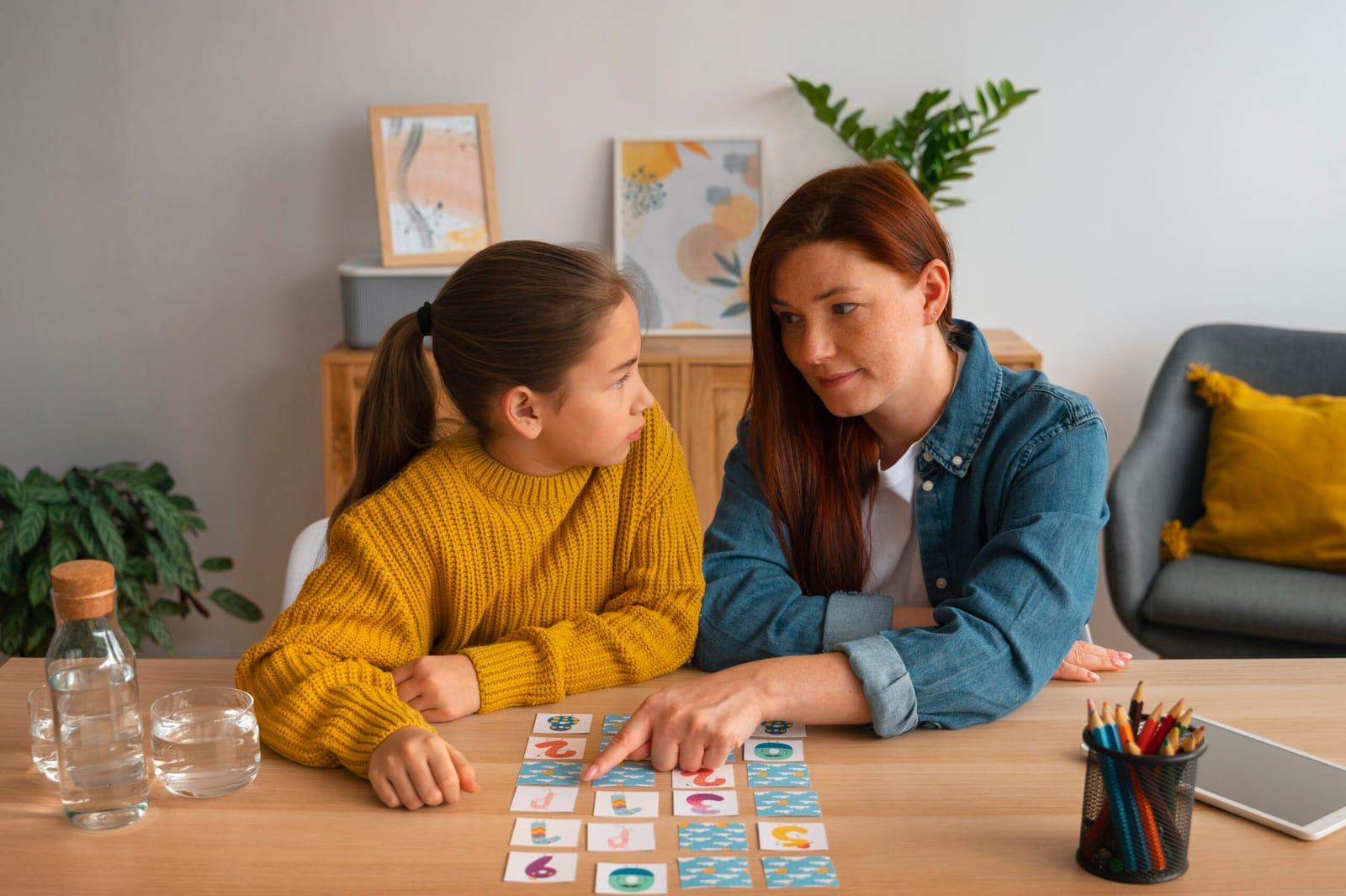
Most sessions look a lot like play. A therapist builds a relationship with your child first, then works on goals inside activities your child enjoys and inside everyday routines such as snack time, getting dressed or playing with a sibling. Each response is recorded, so the BCBA can see what is working. Parents often watch, join in and practice strategies with coaching. See in-home ABA and parent training.
Where did ABA come from?
ABA grew out of B.F. Skinner’s science of behavior. It was defined as a field in 1968, when Donald Baer, Montrose Wolf and Todd Risley described its dimensions in the first issue of the Journal of Applied Behavior Analysis. Its use with children with autism became widely known through Dr. O. Ivar Lovaas’s work at UCLA, including his 1987 study.
Modern ABA has moved well beyond those early methods. Today’s programs are play-based, built on the relationship between child and therapist, and respectful of each child’s comfort, interests and assent. Our guide What modern ABA therapy really looks like explains the difference.
Sources: Baer, Wolf & Risley (1968), Journal of Applied Behavior Analysis 1(1); Lovaas (1987), Journal of Consulting and Clinical Psychology 55(1).
Questions parents ask about ABA
Who is ABA for?+
ABA is best known as a therapy for autism, but it is a science of behavior rather than a treatment for one diagnosis. At Hope Center for Behavior Change we also work with children with ADHD, ODD and intellectual disability. See our services.
Who designs and delivers my child’s program?+
Programs are developed by Board Certified Behavior Analysts (BCBAs) and carried out by Registered Behavior Technicians, with parents and caregivers as part of the team.
Where does therapy happen?+
At home, in the community and in schools, so your child can use new skills in the places they need them.
Is ABA covered by insurance?+
Many private insurance plans cover ABA for autism, and TRICARE covers it through the Autism Care Demonstration. Read about TRICARE for ABA or contact us and we’ll check your plan.
Get a free consultation
At Hope Center for Behavior Change our ABA programs are developed by Board Certified Behavior Analysts (BCBAs) and implemented by Registered Behavior Technicians.