
Early Intervention ABA for Toddlers and Young Children
Early signs • Play-based learning • Parents involved
If you have noticed that your toddler is not talking, playing or responding the way you expected, you are right to look into it. Early support can make everyday life easier for your child and your family. Hope Center for Behavior Change offers gentle, play-based ABA for young children, planned by a BCBA and built around your child’s interests, with you involved in every step.
- 4.9 on Google (13 reviews, October 2026)
- No waitlist
- BCBA-led programs
- BCBS, Aetna, Cigna, UMR, TRICARE
- Home, school, daycare & center
The short answer
Early intervention ABA is applied behavior analysis started when a child is young, often soon after a developmental concern or an autism diagnosis. Sessions are play-based and build communication, play, social and daily living skills. Parents learn the same strategies so practice continues through everyday routines at home.
What early signs should parents watch for?
Every child develops at their own pace. Still, the CDC encourages parents to track milestones in how a child plays, learns, speaks, acts and moves, and to talk with the child’s doctor if something seems off. Some things parents often notice:
- Few words, gestures or sounds compared with other children the same age
- Not responding to their name or not looking where you point
- Little interest in back-and-forth play or showing you things
- Losing words or skills they used to have
- Very strong reactions to changes, sounds or textures
None of these alone means a diagnosis. They are good reasons to ask your child’s doctor about developmental screening.
Why does early support matter?
The early years are a busy time for learning to communicate, play and connect. Starting support early means your child gets help with these skills while they are first forming, and you get practical strategies for daily life sooner.
Our guide why early intervention matters explains developmental milestones and how ABA can support them.
What does play-based ABA look like for a toddler?
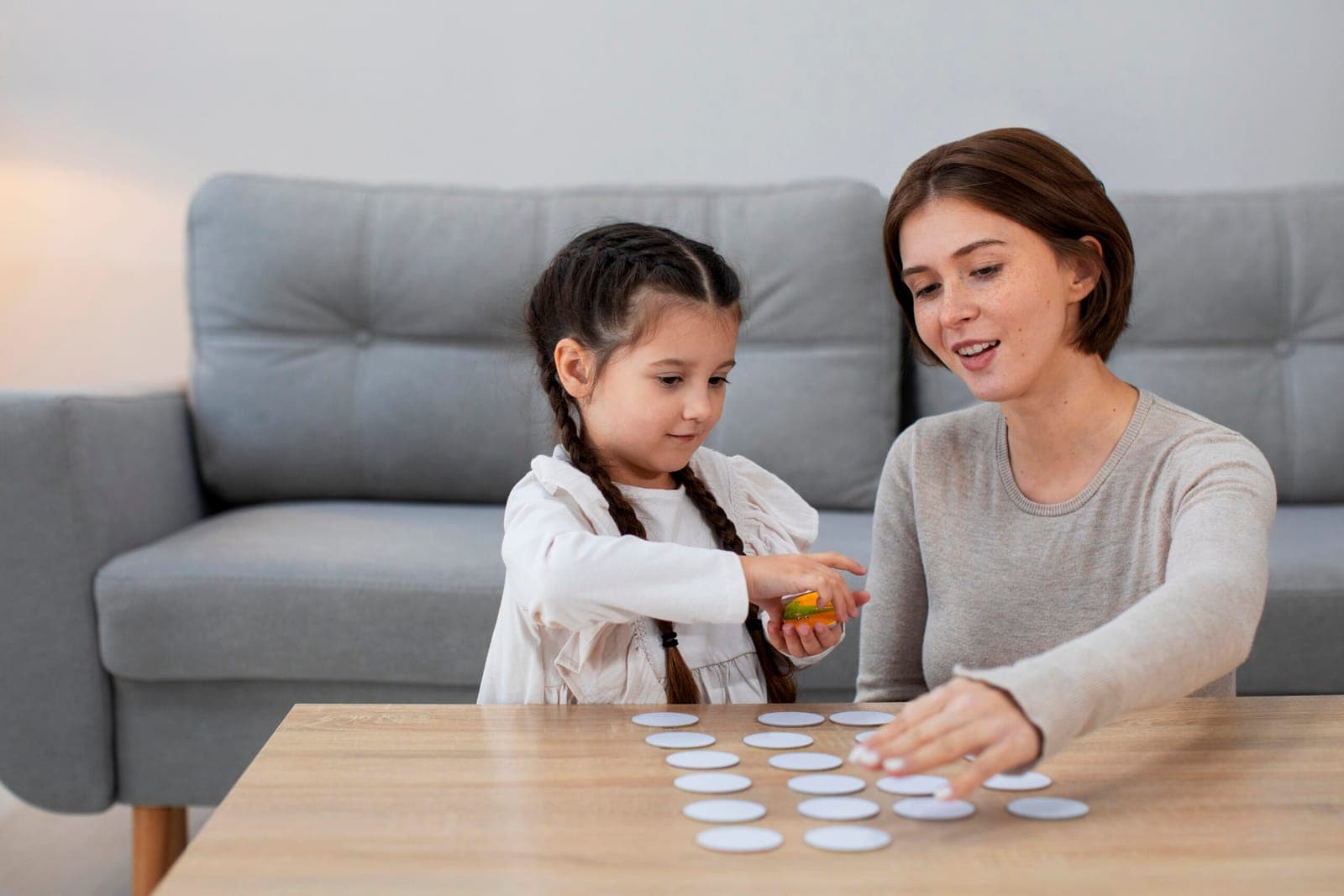
For young children, ABA looks a lot like play. The therapist follows your child’s interests and builds learning into games, songs, snacks and toys. Skills are broken into small steps and each success is celebrated.
- CommunicationWords, signs, gestures or pictures to ask for what your child wants.
- Play and social skillsTaking turns, sharing attention and playing alongside others.
- Daily routinesMealtimes, dressing, bedtime and other everyday moments.
- Big feelingsGentle ways to cope with frustration and change.
Read more in our guide ABA for toddlers: gentle, play-based foundations.

How are parents involved?
You know your child well, and you are with them far more than any therapist. Through parent and caregiver training you learn the strategies used in sessions and how to fit them into the routines you already have. Parent training happens every week. Sessions can take place in your home, where these routines happen, at daycare or at one of our locations in West Palm Beach, Temple Terrace (Tampa), Port Charlotte, Jacksonville and Sebring. Our team provides care in English, Spanish, Haitian Creole, Bengali and Russian; read about bilingual ABA therapy.
Talk with our teamWhat is Florida Early Steps?
Early Steps is Florida’s early intervention program, run by the Florida Department of Health, for infants and toddlers from birth to 36 months with developmental delays, disabilities or at-risk conditions. Anyone, including a parent, can make a referral, and there is no income requirement.
Early Steps is a separate program from Hope Center. If your child is under 3, it is worth contacting them alongside your child’s doctor.
How do we get started?
- 1Talk with your child’s doctorShare your concerns and ask about screening or a referral for an evaluation.
- 2Call usWe answer your questions and check your insurance benefits before anything starts.
- 3Assessment and planA BCBA meets your child, talks with you and writes a plan around your goals.
- 4Sessions beginAn RBT delivers play-based sessions. Your BCBA writes and reviews the plan and supervises the RBT every week, and our clinical director reviews every plan before it goes to insurance. You can call or text your RBT, your BCBA or our front desk.
There is no waitlist. From your first call it can take as little as three weeks to start: intake paperwork, a benefits check, a 2–4 hour assessment at our center or at home (in one or two sessions), and up to two weeks to finalize the treatment plan and send it to your insurance. Once the plan is approved, services usually begin within 3–5 business days. Slow paperwork or insurance replies can stretch this to a few months. You can meet your child’s team before services start. We have locations for center and home services in West Palm Beach, Temple Terrace (Tampa), Port Charlotte, Jacksonville and Sebring, and we also serve Broward County and Fort Lauderdale, St. Lucie County, Orlando, Lakeland, Winter Haven, Plant City and Apollo Beach; see where we provide ABA.
Contact usQuestions families ask
Does my toddler need an autism diagnosis to start ABA?+
Insurance coverage for ABA usually depends on a diagnosis such as autism (ASD) or Down syndrome from a qualified provider, such as a developmental pediatrician or child psychologist. BCBAs do not diagnose. Self-pay is available for all services, so a diagnosis is not required to self-pay. If you are still waiting for an evaluation, we can talk through your options and help you think about where to go.
Is ABA too much for a very young child?+
Early intervention ABA is meant to be gentle. Sessions follow your child’s interests, use play and praise, and move at a pace that suits your child. You are welcome to watch and take part.
Can we use Early Steps and ABA at the same time?+
Many families use more than one kind of support. Early Steps is a state program and works with your family on its own plan. Ask Early Steps and your insurance plan how services fit together for your child.
What if my child is just a late talker?+
Some children catch up on their own and some need support. It can be hard to tell at home. Your child’s doctor can do a developmental screening and suggest next steps. Asking early does not mean labeling your child.
Does insurance pay for early intervention ABA?+
Coverage depends on your plan and usually on a diagnosis such as autism (ASD) or Down syndrome. We accept Blue Cross Blue Shield, Aetna, Cigna (Evernorth), UMR, Personify Health and TRICARE East (Humana Military), with Optum coming soon, and we check your benefits before services start. We do not currently accept Medicaid. Self-pay is available for all services, with a sliding scale to help with deductibles and copays. See our insurance page for more.
Related
- Parent and caregiver trainingStrengths-based coaching that helps parents and caregivers use ABA strategies every day.Learn more →
- In-home ABA therapyABA in your own home, built around daily routines like dressing, meals and play with siblings.Learn more →
- ABA assessmentsABA skills and functional behavior assessments that lead to a clear, individualized treatment plan.Learn more →
- New familiesWhat happens first, what to have ready and how ABA starts at Hope Center.Learn more →
Have a question about your child’s development?
You do not have to wait and wonder. Call us to talk through your concerns and your next step.
Our ABA programs are developed by Board Certified Behavior Analysts (BCBAs) and carried out by Registered Behavior Technicians.
- No cost to talk to us
- No waitlist: starting can take as little as three weeks from your first call
- Free benefits check, sliding scale and self-pay options
- Our operations team calls you back