
Early Intervention ABA for Toddlers in Jacksonville
Toddlers and preschoolers • Alongside Early Steps and Child Find • Duval County
Maybe your toddler is not saying words yet, does not answer to their name, or melts down at every change. Maybe a doctor just said the word autism. For Jacksonville parents of young children there are free public programs and private ABA, and it is not always clear how they fit. This page explains the options for children under 3 and for 3 to 5 year olds in Duval County, and what Hope Center for Behavior Change can add.
- 4.9 on Google (13 reviews, October 2026)
- No waitlist
- BCBA-led programs
- BCBS, Aetna, Cigna, UMR, TRICARE
- Home, school, daycare & center
The short answer
Early intervention ABA in Jacksonville is play-based applied behavior analysis for toddlers and preschoolers. Hope Center for Behavior Change provides it at home, at daycare and in the community across Duval County, with weekly parent training. Children under 3 can also get free services from Northeastern Early Steps, and 3 to 5 year olds can be screened through Child Find.
Which program fits your child’s age?
Duval County families usually meet three systems in the early years. They are run by different agencies and can often be used together.
- Birth to 36 months: Northeastern Early StepsFlorida’s early intervention program, run locally by UF College of Medicine Jacksonville. Free to families, with no co-pays or deductibles. (904) 427-7600.
- Ages 3 to 5: Child Find and the school districtFree developmental screening and, if needed, a school evaluation for preschool special education through Duval County Public Schools.
- Any age: private ABAApplied behavior analysis paid by your health plan or self-pay, planned by a BCBA and delivered by an RBT.
Our guide Early Steps vs Child Find vs CARD compares them side by side.
How does Early Steps work for Jacksonville toddlers?
Northeastern Early Steps serves children from birth to age 3 in Duval, Clay, St. Johns, Nassau, Baker and Bradford counties. It is free to families regardless of income: insurance may be billed, but families are not charged co-pays or deductibles. Its therapists use a caregiver coaching model, building skills during everyday routines, usually at home or at daycare.
Anyone can refer a child, including a parent. Call (904) 427-7600, ask your pediatrician to refer, or use the statewide line, 1-800-218-0001. You do not need a diagnosis to make a referral. Step-by-step help is in how to make an Early Steps referral.
Early Steps ends at the third birthday, so planning for the handoff to the school district starts months before. See turning 3: the Early Steps transition.
What about 3 to 5 year olds?
After age 3, early childhood special education moves to the public school district. Child Find is the district’s duty to locate and evaluate children who may have a disability, and in Florida the FDLRS network helps with free developmental screenings for children from 3 until kindergarten. If a screening raises a concern, the district asks for your consent to a full evaluation, which is also free.
Your child does not need to be enrolled in a Duval school to be screened. Ask your zoned school or Duval County Public Schools’ Exceptional Education and Student Services department how to request one. Our guide to FDLRS and Child Find explains the process and has a preschool evaluation request letter.
How does private ABA fit alongside these programs?
Early Steps and school services are built around coaching and education. Private ABA adds regular one-to-one teaching sessions with an RBT, supervised weekly by a BCBA, plus weekly parent training. Many families use both, as long as the week does not get overloaded. Whether ABA is right for your child, and how many hours, is a decision for you and your child’s clinicians, and coverage is decided by your plan. Our guide Early Steps vs private ABA goes deeper.
With your permission, we can share goals with your Early Steps provider or your child’s preschool team so everyone is working in the same direction.
- Communication: requesting with words, signs, pictures or a device
- Play: turn-taking, joint attention and playing near other children
- Daily routines: meals, dressing, diapering and toilet training, sleep
- Coping with change: transitions, waiting and new places

What toddler ABA with Hope Center looks like
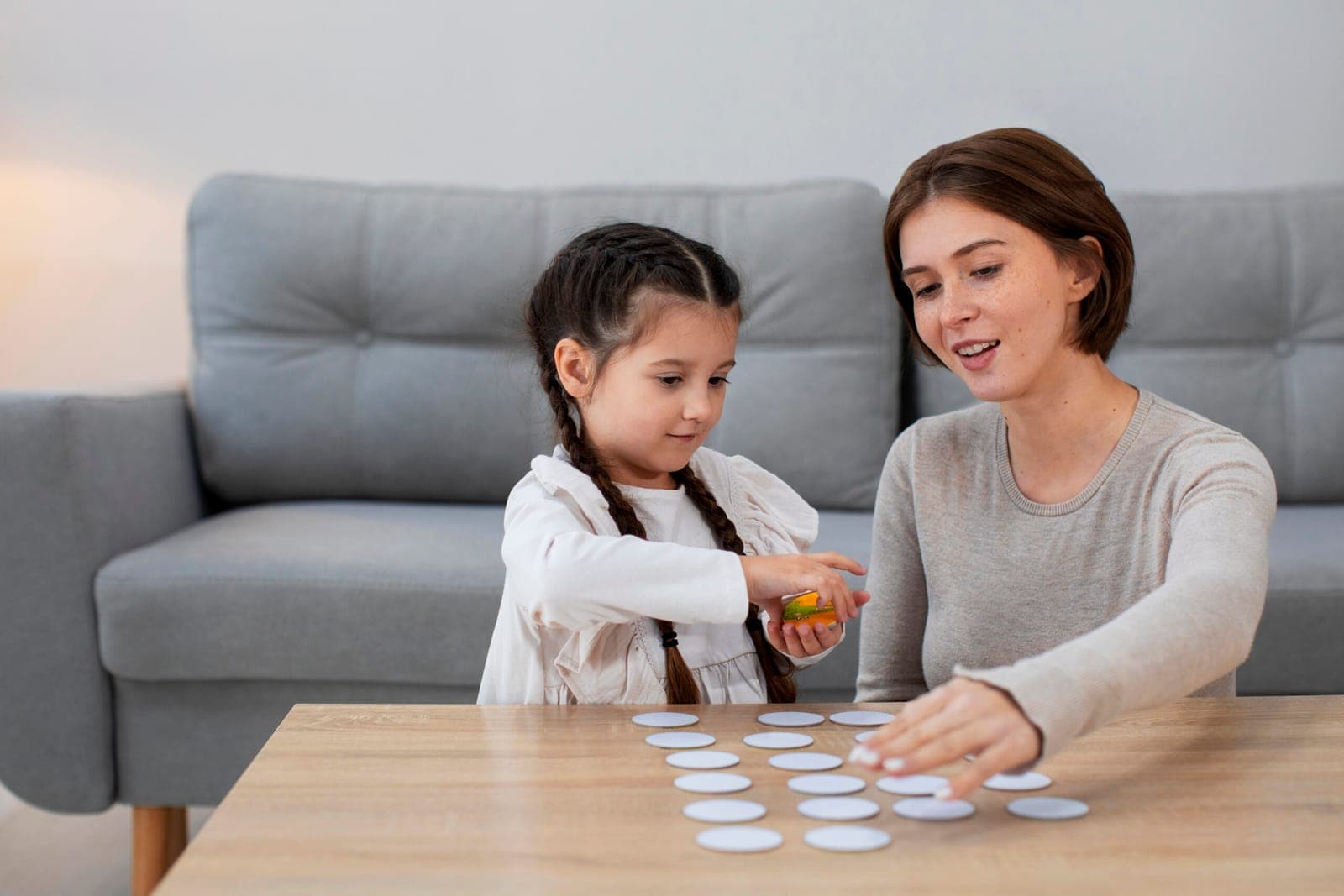
For a 2 or 3 year old, ABA looks a lot like play. The RBT follows your child’s interests and builds learning into bubbles, songs, snacks and toys, breaking skills into small steps. Our approach is trauma-informed and assent-based, with no restraint.
Sessions take place at home, at daycare when the daycare agrees, and in the community. A responsible adult 18 or older needs to be home for in-home sessions, and you are welcome to join in. We serve children from age 1 in Duval County, in English, Spanish, Haitian Creole, Bengali and Russian. See in-home ABA in Jacksonville and our guide on daycare or an ABA center for a young child.
How to start toddler ABA in Duval County
- 1Talk to your pediatricianShare your concerns. Insurance-funded ABA usually needs a diagnosis, such as autism. Our [Jacksonville autism evaluation guide](/florida-aba-guide/diagnosis/autism-evaluation-jacksonville/) lists where to start.
- 2Refer to Early Steps or Child FindUnder 3: Northeastern Early Steps, (904) 427-7600. Ages 3 to 5: ask your zoned school about a Child Find screening.
- 3Call Hope CenterCall 561-337-8865 or [contact us](/contact/). We check your benefits for free.
- 4Assessment and planA BCBA assesses your child, usually at home, writes the plan within about two weeks, and we send it to your insurer after you sign.
- 5First sessionsUsually within 3 to 5 business days of approval. There is no waitlist.
Questions families ask
Can my toddler get Early Steps and private ABA at the same time?+
Often, yes. They are separate services paid by different systems. Early Steps decides its services through your child’s IFSP team, and your health plan decides ABA coverage. Tell each team about the other so goals line up and the schedule stays manageable.
What is the youngest age you serve in Jacksonville?+
We serve children from age 1. For very young children, sessions are short, playful and closely tied to family routines, and parent training is a big part of the plan.
Does insurance cover ABA for a 2 year old?+
Many plans cover ABA for young children with an autism diagnosis and medical necessity. We accept Florida Blue, Aetna, Cigna (Evernorth), UMR, Personify Health and TRICARE East. We do not accept Medicaid or Medicare. We check your benefits for free. See ABA therapy cost in Jacksonville.
Is UF Jacksonville CARD the same as Early Steps?+
No. CARD (Center for Autism and Related Disabilities) at UF Health Jacksonville offers free support, training and consultation for autistic people and their families. It is not an ABA provider and not Early Steps. Call (904) 633-0760.
Do you serve toddlers in Orange Park or St. Johns County?+
We do not currently serve Clay County, Orange Park or St. Johns County. We serve Duval County. Families nearby can call 561-337-8865 to ask whether we can staff their area. See the Jacksonville hub.
Related
- JacksonvilleOur Jacksonville location: center and in-home ABA for families in Duval County.Learn more →
- In-home ABA in JacksonvilleABA in your Duval County home, built around real routines, with weekly parent training.Learn more →
- Early intervention ABAGentle, play-based ABA for toddlers and young children, with parents involved at every step.Learn more →
- Parent and caregiver trainingStrengths-based coaching that helps parents and caregivers use ABA strategies every day.Learn more →
Talk with us about your toddler
Call 561-337-8865 or send a request. We will check your benefits for free and help you see how ABA can fit with Early Steps or Child Find.
Our ABA programs are developed by Board Certified Behavior Analysts (BCBAs) and carried out by Registered Behavior Technicians.
- No cost to talk to us
- No waitlist: starting can take as little as three weeks from your first call
- Free benefits check, sliding scale and self-pay options
- Our operations team calls you back